China Seizes Panamanian Ships, Latin America Condemns Move

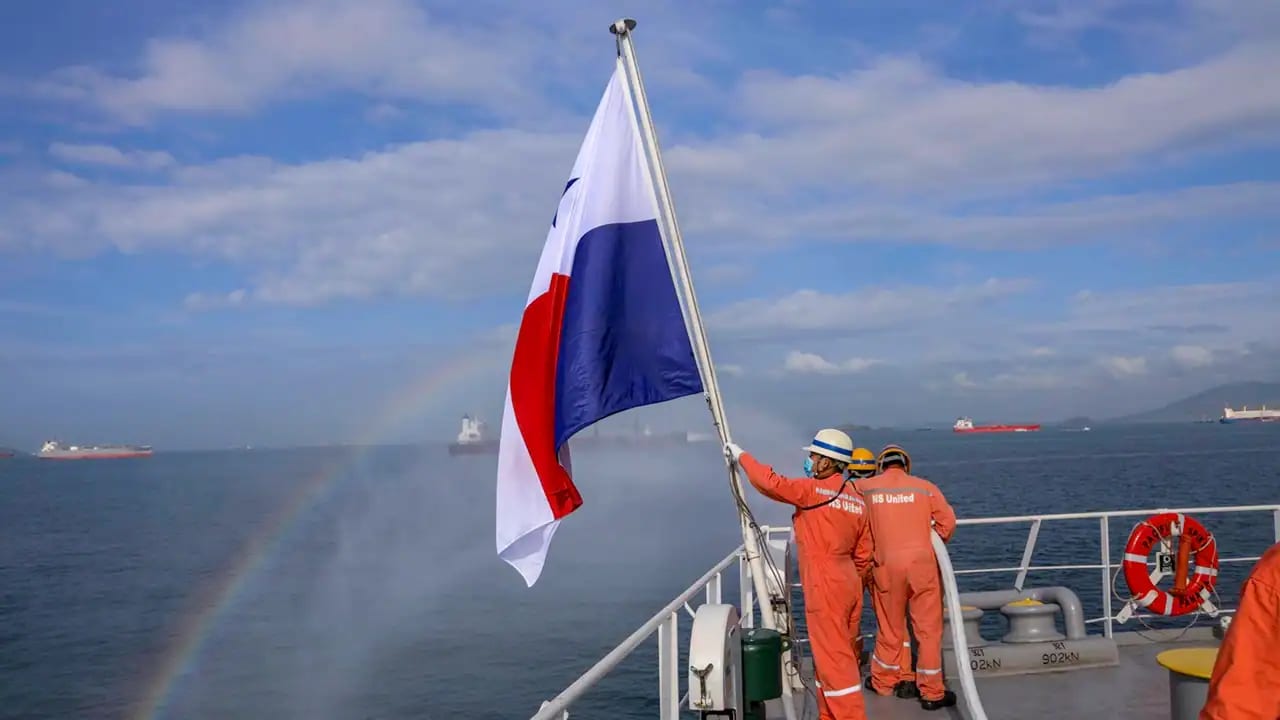
Panama City / Washington: The United States and five Latin American countries — Bolivia, Costa Rica, Guyana, Paraguay, and Trinidad and Tobago — issued a joint statement on Tuesday, April 29, 2026, condemning what they described as China's "targeted economic pressure" on Panama, after Beijing intensified detentions of Panama-flagged vessels in its ports in retaliation for the judicial annulment of port concessions held by Hong Kong-based CK Hutchison.
According to the US Federal Maritime Commission (FMC), China has detained nearly 70 Panama-flagged ships since March 8, 2026 alone, far exceeding historical norms. FMC Chair Laura DiBella stated that the intensified inspections "were carried out under informal directives and appear intended to punish Panama after the transfer of Hutchison's port assets." Data from Lloyd's List Intelligence shows that bulk carriers and vessels over 15 years old comprise the majority of those detained, with Japanese shipowners accounting for 39% of cases despite having no stake in the dispute.
Background: The Panamanian Supreme Court Ruling
The dispute originated when Panama's Supreme Court annulled in January 2026 contracts allowing Panama Ports Company (PPC), a Hong Kong-based CK Hutchison subsidiary, to manage the Balboa and Cristóbal terminals at either end of the Panama Canal. The decision coincided with pressure from US President Donald Trump, who since his electoral campaign had accused China of exercising undue influence over the strategic interoceanic canal.
Following the ruling, the Panamanian government designated subsidiaries of APM Terminals (Maersk) and Terminal Investment Limited (MSC) as interim port operators for 18 months. In response, Chinese state-owned shipping giant COSCO suspended operations at the Port of Balboa. CK Hutchison also initiated international arbitration proceedings claiming damages exceeding $2 billion, accusing Panamanian authorities of illegally seizing its assets.
Reactions and Geopolitical Tensions
Secretary of State Marco Rubio said he was "deeply concerned" by China's economic pressure and declared that Washington "stands in solidarity with Panama," adding that "any attempt to undermine Panama's sovereignty is a threat to us all." China, for its part, accused the United States of "fabricating accusations" and hypocrisy, arguing that Washington is the one interfering in other countries' internal affairs.
Panamanian President José Raúl Mulino acknowledged the increase in interceptions of Panama-flagged ships, though he tried to downplay their impact as "highly technical" and assured that Panama had conveyed its "concern" to Chinese diplomatic authorities. Analysts note that the Panama Canal dispute has become the latest arena of geopolitical rivalry between Washington and Beijing in the Western Hemisphere, with direct implications for global trade and international maritime logistics.
Reader Conversation
You must be logged in to post a comment.