Venezuela and US Negotiate Deal on Critical Minerals

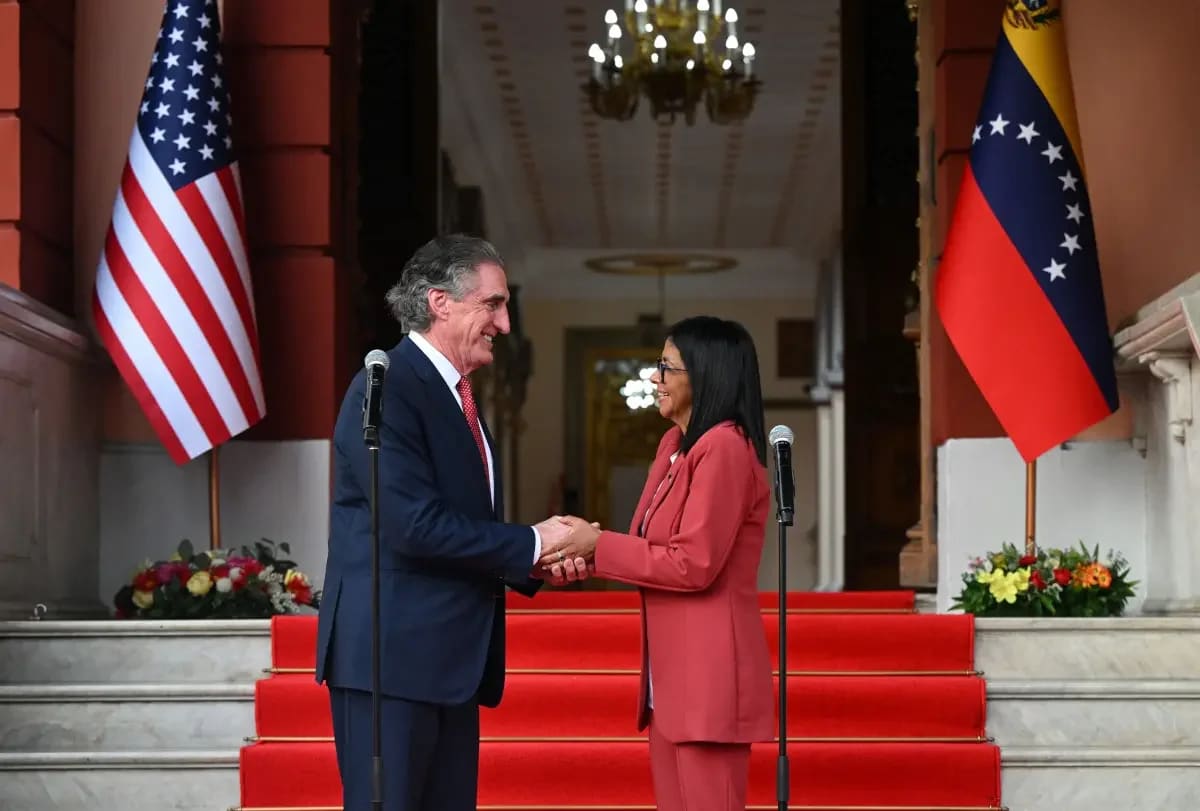
Washington/Caracas: The Rodríguez administration in Venezuela and the Trump administration in the United States are exploring a mining cooperation agreement on critical minerals that would allow US companies to access Venezuela's vast gold, coltan, bauxite, and copper resources in exchange for sanctions relief and support for the political transition. The negotiations mark a pragmatic turn in a historically tense relationship.
Venezuela holds one of the world's largest mineral reserves in the Orinoco Mining Arc, an area of 111,843 square kilometers in the south of the country. The area contains significant deposits of gold, diamonds, coltan, iron, bauxite, and rare earths. However, exploitation has been carried out in a disorganized and illegal manner, with enormous environmental damage and rights violations in indigenous communities.
US Strategic Interest
The Trump administration, in its quest to reduce dependence on China for strategic minerals for technology and defense, views Venezuela as a potential source of critical resources in the Western Hemisphere. Secretary of State Marco Rubio has indicated that access to minerals is an element of the transition roadmap drawn up by Washington for Venezuela.
Rubio reaffirmed that any agreement will be conditioned on concrete advances in the democratic transition: setting an electoral date, releasing all political prisoners, and opening civic space. Human rights organizations warn that mineral interest should not lead Washington to concede on its democratic demands.
Environmental and Indigenous Impact
The mining expansion in the Orinoco Arc has generated concern among environmentalists and Pemón, Yanomami, and Piaroa indigenous communities. Scientific studies document deforestation, river contamination with mercury, and population displacement. Any mining agreement will have to address these realities to be sustainable over time.


Reader Conversation
You must be logged in to post a comment.