Pre-Incan Funerary Platform Unearthed in Peru Illuminates Ancient Chimu Kingdom Rituals

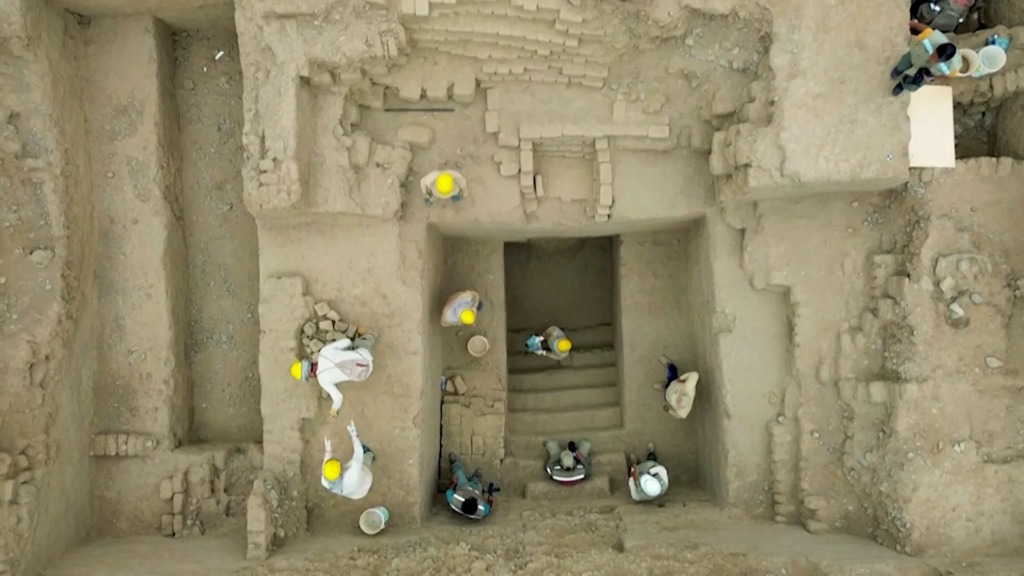
TRUJILLO: In one of the most significant archaeological discoveries in South America in recent years, a team of Peruvian researchers has unearthed a remarkably intact 600-year-old ceremonial funerary platform belonging to the pre-Incan Chimu civilization in the Moche Valley of northern Peru.
The monumental adobe complex—dating back to approximately 1420 AD—was discovered near the outskirts of Chan Chan, the ancient mud-brick capital of the Chimu Kingdom and a UNESCO World Heritage site. The excavation has revealed pristine polychrome adobe reliefs, intact burial chambers, ceremonial silver ornaments, and hundreds of masterfully crafted blackware ceramic vessels.
Archaeologists from the National University of Trujillo and the Peruvian Ministry of Culture state that the site represents a specialized elite burial sanctuary dedicated to high-ranking priests and regional administrators who oversaw the kingdom’s sophisticated agricultural and irrigation networks.
Masterpieces of Ancient Andean Engineering and Artistry
The discovered platform measures over 35 meters in length and features intricately sculpted adobe friezes depicting sacred marine iconography, including pelicans, sea otters, lunar deities, and stylized ocean waves. The imagery underscores the Chimu civilization’s deep spiritual and economic dependence on Pacific coastal maritime resources.
Excavators have identified several undisturbed burial chambers containing human remains wrapped in finely woven cotton textiles dyed with natural pigments that have remained vivid for over six centuries.
Alongside the burials, researchers documented extensive caches of offerings, including spondylus shells imported from the warm waters of modern-day Ecuador, intricately carved bone musical instruments, and miniature wooden ceremonial sculptures adorned with turquoise inlay.
Insights Into the Rise and Fall of the Chimu Empire
The Chimu Kingdom flourished along the desert coast of northern Peru from approximately 900 AD until its eventual conquest by the expanding Inca Empire around 1470 AD. Known for their monumental urban architecture and extraordinary hydraulic engineering, the Chimu built complex canal systems that transformed arid coastal valleys into productive agricultural greenbelts.
Archaeologists highlight key historical insights provided by the new discovery:
- Ceremonial Social Hierarchy: The architectural stratification of the platform reveals sophisticated social division, with distinct chambers allocated according to religious status and lineage rank.
- Ancient Trade Corridors: The presence of Ecuadorian spondylus shells and Amazonian featherwork confirms extensive inter-regional trade networks operating long before the Inca road systems.
- Adaptation to Climate Shocks: Sediment layers around the complex indicate that the Chimu reinforced the platform’s foundations following major ancient El Niño flood events, demonstrating advanced engineering resilience.
Conservation and Cultural Tourism Impact
The Peruvian Ministry of Culture has implemented emergency protective roofing and specialized humidity stabilization measures to shield the delicate mud-brick structures from coastal humidity and wind erosion.
Government officials announced plans to construct a dedicated onsite interpretation center and integrate the newly uncovered sector into the Chan Chan cultural tourism circuit by 2027.
The discovery not only enriches the global understanding of pre-Columbian civilization in the Americas, but also reinforces Peru’s status as one of the world’s most extraordinary repositories of ancient human heritage and architectural achievement.


Reader Conversation
You must be logged in to post a comment.