US Blockade Strangles Iran Oil Industry, Threatens Collapse

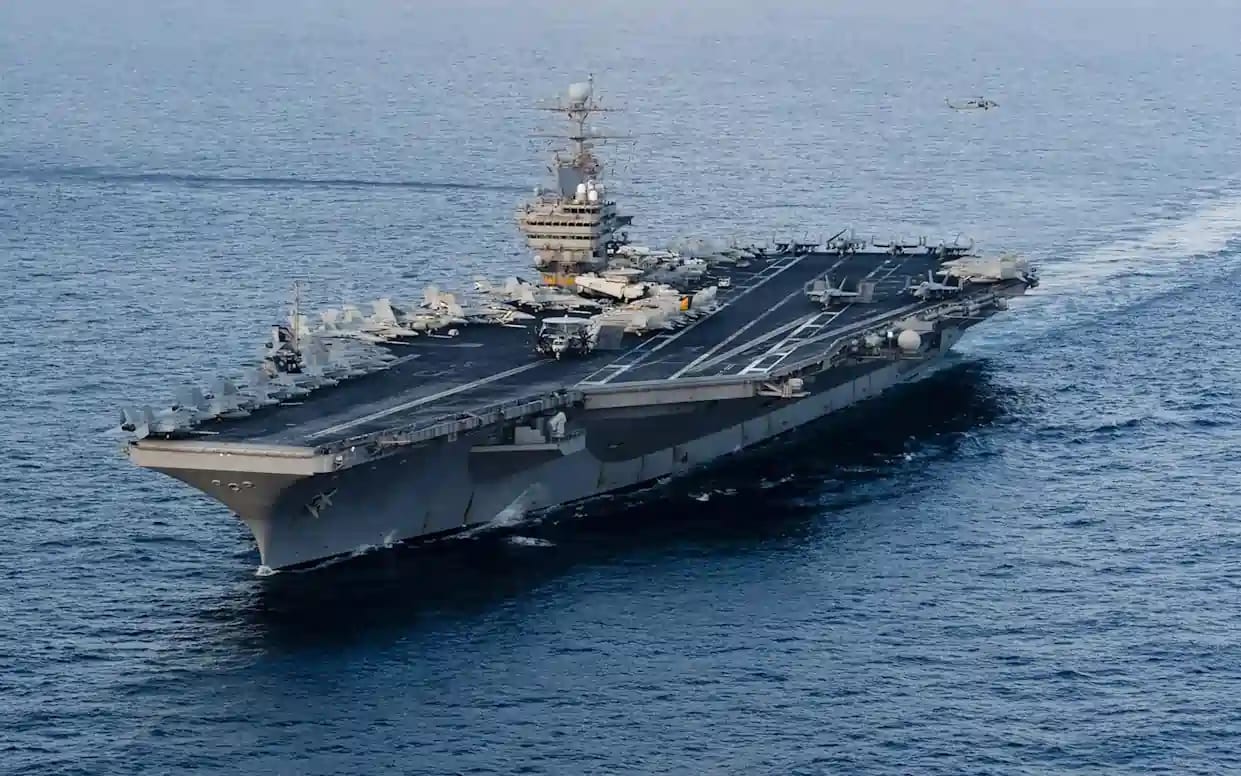
Dubai, United Arab Emirates: Even as Iran restricts global energy supplies through its tight control of the Strait of Hormuz, its own oil industry is increasingly threatened by a US blockade. With no way to export the crude it extracts and rapidly dwindling domestic storage capacity, Iran could be forced to drastically cut or even halt production at some of its wells within just two to three weeks, according to energy market analysts.
Iran was pumping more than three million barrels of crude per day before the war began, with just over half destined for its domestic market. Since the US blockade took effect on April 13, 2026, tankers have been loaded with oil but unable to set sail. Antoine Halff, co-founder and chief analyst of Kayrros — an environmental intelligence firm tracking emissions and energy supply chains — confirmed signs of "a significant slowdown in production," including indications that storage at Kharg Island, Iran's main oil export terminal in the Persian Gulf, is not filling at its usual rate.
How Much Time Does Iran Have Left?
Energy market analysis firms agree that Tehran's room to maneuver is narrow and shrinking week by week. Kpler, a commodities monitoring firm, estimates Iran has about two weeks of production storage capacity remaining, even after already cutting extraction. "Although the immediate impact on revenues is limited, operational restrictions are now forcing production cuts and creating delayed but significant financial pressure," said Homayoun Falakshahi, Kpler analyst.
Wood Mackenzie, another energy sector analysis firm, estimates Iran could run out of storage capacity in about three weeks. "If the blockade persists, cuts become inevitable," wrote Alexandre Araman of Wood Mackenzie, warning that closures lasting more than a month "pose a risk of long-term damage" to the fields, and that recovery of older wells "remains uncertain."
The History Behind Iran's Vulnerability
The fragility of Iran's oil industry has deep roots. Since oil was first discovered in the country in 1908, the sector has been intimately tied to the region's political upheavals. Infrastructure suffered accelerated deterioration during the 1979 Islamic Revolution — when sector workers went on strike and production fell from six million barrels per day to around 1.5 million — and never fully recovered. Decades of international sanctions prevented modernization of wells, refineries, and export terminals.
Miad Maleki, former US Treasury Department sanctions expert and senior researcher at the Foundation for Defense of Democracies, stressed that the Iranian leadership "really resists" closing wells due to how traumatic it would be in the long term. "They've been under sanctions, isolated for 47 years. Those oil wells are not well maintained. Their machinery is not well maintained," he explained, warning that once closed, wells would not "just spring back to life after a few months."
Economic Pressure and Global Repercussions
The US Treasury Department has tightened sanctions on Iranian oil shipments already at sea, and the US military has seized at least two tankers off the coasts of Asia carrying Iranian crude. Treasury Secretary Scott Bessent warned on social media that "Iran's aging oil industry is starting to shut in production thanks to the United States' blockade. Pumping will soon collapse." Global repercussions are already visible: with fewer tankers carrying Iranian crude, the effects of the Strait of Hormuz closure are amplified, generating aviation fuel shortages and rising gasoline prices worldwide.

Reader Conversation
You must be logged in to post a comment.