US Sends Hospital Ship to Peru as El Niño Threat Raises Disaster Concerns
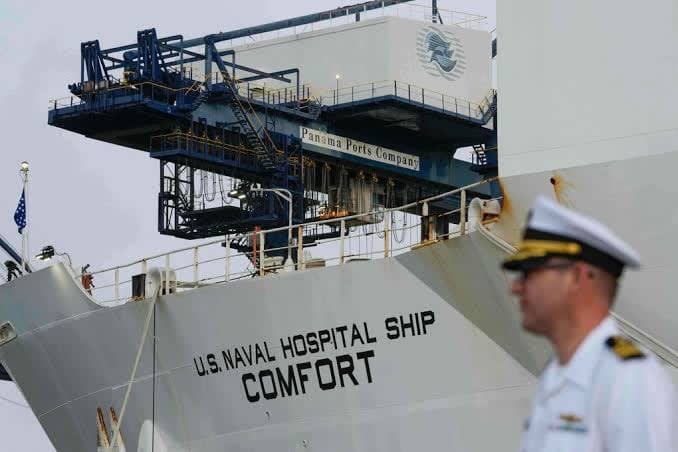
The United States will send a military hospital ship to Peru as part of broader efforts to assist the South American country prepare for possible effects of a potentially strong El Nino climate event. USNS Comfort is scheduled to arrive on Peru’s northern Pacific coast in February 2027, at the height of the weather phenomenon.
The deployment is part of a broader package of assistance providing medical support, emergency supplies, technical expertise and monitoring to help Peru deal with potential flooding, infrastructure damage and humanitarian challenges.
Peruvian and U.S. officials said they would cooperate after talks between U.S. Ambassador Bernie Navarro and Peruvian Foreign Minister Carlos Espá on better coordination between the two nations and improving disaster preparedness.
It follows warnings from climate experts that the developing El Nino event is one of the strongest in decades Scientists are warning of a very strong El Nino that will disrupt weather patterns across Latin America, affecting rainfall, agriculture, fisheries and infrastructure.
The threat is particularly serious in Peru, where past El Nino events have brought severe flooding, landslides and economic disruption to the Pacific coast of the country.
USNS Comfort Enhances Peru’s Disaster Readiness While on Deployment
The arrival of the USNS Comfort is expected to enhance Peru’s medical and emergency response capacity at a time of increased climate risk.
The hospital ship is operated by the US Navy which has previously deployed it on humanitarian missions across the globe providing medical care in the wake of natural disasters and public health emergencies.
The ship's mission will be part of a broader cooperation framework that includes equipment, technical assistance and surveillance operations to help Peru prepare for El Nino-related impacts, U.S. officials said.
Peruvian officials said improved coordination among countries will help ensure a faster response during emergencies.
The announcement comes in the wake of recent disasters in the region, such as recovery efforts in Colombia and Venezuela following earthquakes, where governments and international organizations have united in humanitarian aid.
The US has increased its humanitarian response as Latin American governments gear up for a wave of climate-related challenges.
Peru is seeking to lessen the impact of extreme weather so as to avoid large-scale devastation.
Officials are preparing for possible flooding, damage to transport networks and disruption to vulnerable coastal communities.
Historical El Nino events are a warning of how quickly heavy rain can overwhelm infrastructure, especially in poorly drained areas built more cheaply.
The push with the United States is designed to help Peru enhance its capacity to react quickly if the situation worsens.
The deployment underscores the growing importance of international cooperation in responding to climate-induced disasters.
El Niño: Floods, Infrastructure Damage on the Way
El Niño is a weather pattern that can influence weather around the world, with warmer than average sea surface temperatures in the central and eastern Pacific Ocean.
In Peru, strong El Niños are typically associated with heavy rains along the northern coast, resulting in floods, landslides and damage to homes, roads and public infrastructure.
The country has borne the full brunt of the effects of El Niño events in the past including the catastrophic 1997-1998 event that brought havoc to parts of the region.
Metrologists have warned that the current El Nino could turn out to be a very powerful one. U.S. climate officials say there’s a very high chance of a very strong El Niño developing in 2026, and it could be of historic strength.
There have been some disruptions in the weather in parts of Peru recently. Heavy rain linked to El Nino has caused flooding and landslides in some areas, cutting off access to Machu Picchu.
The effects are more than structural.
Warming Pacific waters can also change marine environments and push key fish species away from traditional fishing grounds, threatening Peru's fishing sector.
Farming, tourism and transport networks could be badly hit as the climate crisis worsens.
So, officials are trying to be pro-active, not reactive.
The US’s effort to collaborate is to provide more resources before the worst of the impacts are felt.
Washington, Lima Strengthen Cooperation on Climate
Peru-US partnership part of broader effort to increase collaboration on climate resilience, humanitarian response.
Officials in both countries have stressed the importance of early planning, especially as extreme weather events are increasing in frequency and cost.
The cooperation plan provides for technical assistance, emergency response capacities and medical assistance to support Peru in case of possible disasters.
"The two countries have prepared a road map to prevent, decrease and respond to the effects of El Nino," said Peruvian Foreign Minister Carlos Espá.
The partnership is also important economically and diplomatically.
Peruvian authorities held meetings with business representatives interested in investment opportunities in sectors such as mining and infrastructure in the United States.
Disaster preparedness and economic cooperation serve as a microcosm of the broader Washington-Lima relationship.
Supporting disaster response in Latin America is part of a broader U.S. effort to strengthen regional partnerships.
Peru is preparing for a potentially damaging climate event, and international aid is an additional resource for the country.
Since he took office, President Keiko Fujimori's government has had the threat of El Niño as its No. 1 priority.
Now officials are trying to upgrade emergency systems, reduce risks ahead of the expected peak of the phenomenon.
Peru to Test El Nino's Long-Term Climate Resilience
The coming El Niño is a big test of Peru’s ability to manage climate-related risks.
But in times of disaster, emergency aid can be helpful, but experts say improved infrastructure, better warning systems and better urban planning are needed for long-term resilience.
Peru’s coastal communities are vulnerable to high rainfall and flooding, and the risk is particularly high in many areas.
The country’s history of El Nino events has shown the need to prepare roads, drainage systems, hospitals and emergency services for disasters.
While the mission of the USNS Comfort offers more help, officials say the climate challenges require continued investment.
In Latin America, the fear has been of a strong El Niño. Other countries are also getting ready for possible impacts on agriculture, energy systems and transportation networks.
Peru is focusing on community protection and damage reduction.
The effort involves working with the United States, which provides medical support, technical expertise and emergency planning.
With the climate event unfolding, officials will monitor the weather and modify preparations as necessary.
The USNS Comfort is expected to arrive in 2027 and is expected to strengthen Peru’s response capacities at a critical juncture.
The partnership is a sign that climate-related issues are increasingly becoming issues of international cooperation that require cooperation between governments before extreme events occur
Reader Conversation
You must be logged in to post a comment.