Central American Caravans Seek New Route Amid Restrictions

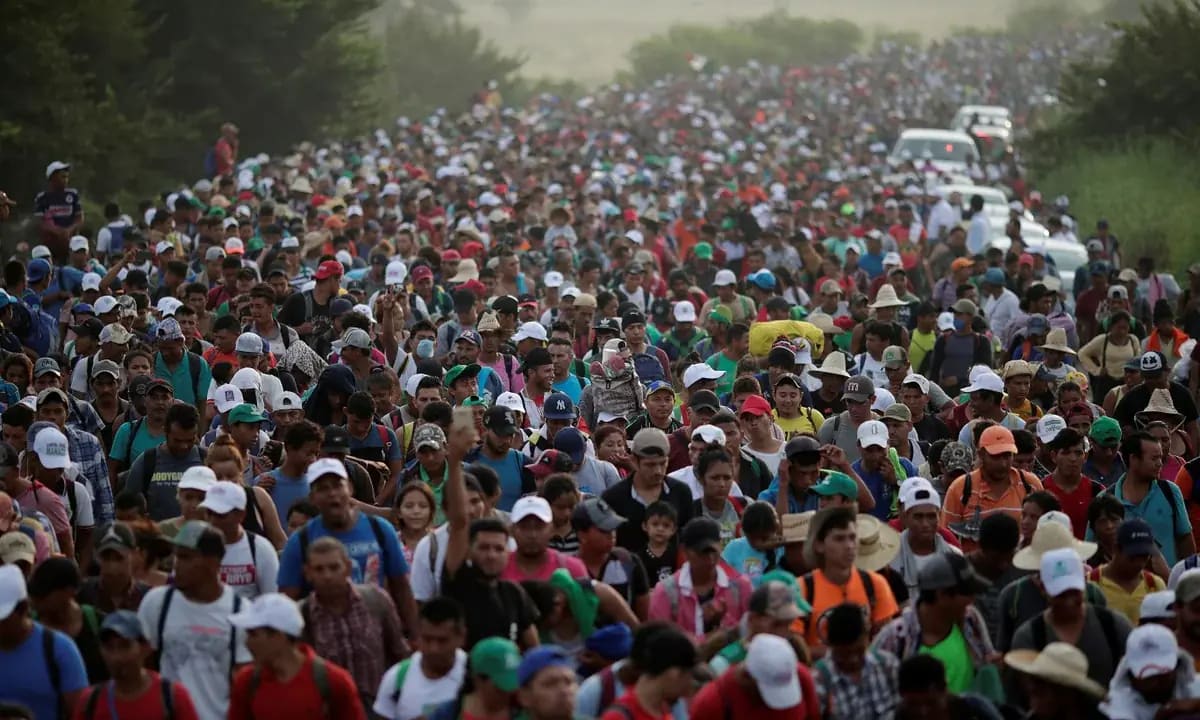
Tapachula: New migrant caravans mainly from Honduras, El Salvador, and Guatemala continue forming on Mexico's southern border in 2026, although on a smaller scale than the 2022-2023 peaks. Central American migrants are seeking new routes to reach the US border in response to restrictions implemented by the Mexican government and increased surveillance by the US Department of Homeland Security.
The city of Tapachula, in the state of Chiapas, remains the main entry point for migrants crossing from Guatemala. Mexican immigration authorities process approximately 3,000 asylum applications per month in that city alone, with a system that continues to be overwhelmed. Wait times to obtain temporary documents allowing transit through Mexico can exceed six months.
Factors Driving Migration
Central American migration continues to be driven by a combination of factors: gang violence, structural unemployment, the impact of natural disasters linked to climate change, and endemic corruption. Honduras and Guatemala maintain poverty rates above 50%, and access to quality education and health continues to be limited in rural areas.
Conditions have improved somewhat in El Salvador, whose State Department security rating rose to Level 1, which has reduced the flow of Salvadorans. However, analysts warn that the reduction in violence has not been accompanied by improvements in economic and civil rights conditions.
Mexico's Containment Policy
The Claudia Sheinbaum government has maintained the migration containment policy negotiated with the Trump administration, which includes the presence of the National Guard on the southern border and expedited deportation agreements for migrants without documentation. Human rights organizations have criticized these policies for putting vulnerable migrants at risk.

Reader Conversation
You must be logged in to post a comment.