Brazil Court Ruling Puts Amazon Soy Moratorium at Risk

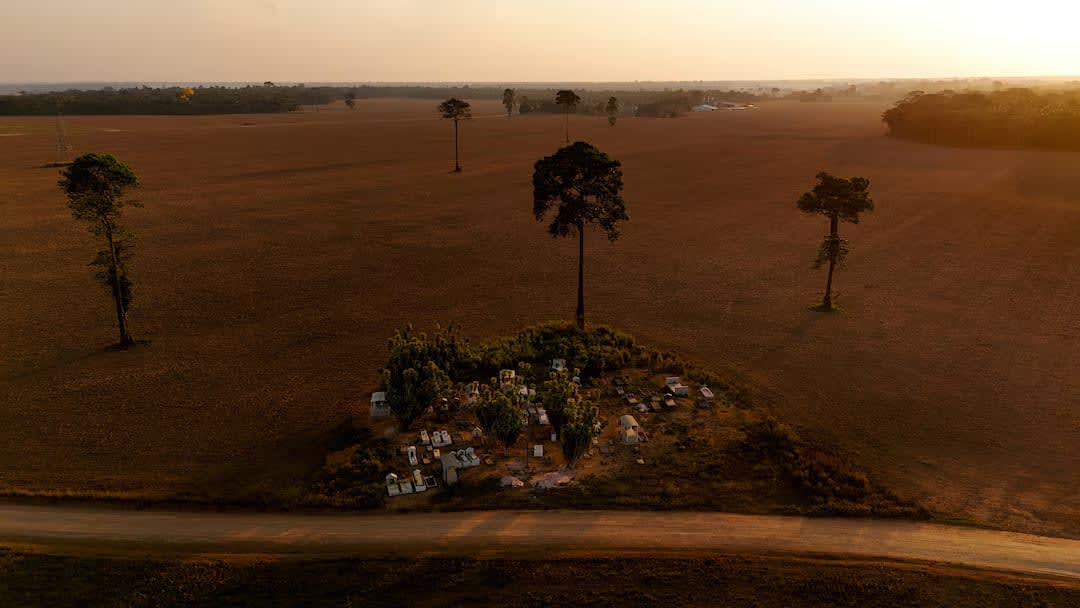
Brazil’s top court upheld a state law that trims incentives tied to the country’s Amazon soy moratorium, casting doubt on one of the world’s best-known efforts to curb deforestation caused by agricultural expansion. The ruling is a blow for environmental groups who have touted the deal as a tool to help curb forest loss in the Amazon.
The court said the state could pull the tax breaks for farmers and companies that participate in the voluntary pact. In another mixed result for both environmentalists and agricultural producers, the court ruled the soy moratorium itself constitutional.
The Amazon soy moratorium was created in 2006 by a voluntary agreement among key soy traders, industry associations and environmental groups. It prevented companies from purchasing soy from Amazon land deforested after a certain date.
The deal has become a rallying cry for private sector action against deforestation, enabling Brazil to ramp up soybean production while trying to reduce pressure on rainforest ecosystems. But recent skirmishes between farm states and environmental groups are creating more pressure on the fate of the deal.
Court Decision Casts Pall Over Amazon Conservation Efforts
Brazil’s Supreme Court has invalidated state laws that eliminated financial incentives for companies and farmers following the Amazon soy moratorium. Big soy-producing states like Mato Grosso and Para started the moves after lawmakers said states should have more say over agricultural policies.
The soy moratorium was designed to stop the big traders buying soy grown on land that had been cleared in the Amazon rainforest. It was not a government rule, but a voluntary pact, and it has become one of the most impactful conservation initiatives in Brazilian agriculture.
Environmental groups say dropping incentives could lead to more deforestation, as producers would have less pressure to keep deforestation out of supply chains. Decision could undo years of progress in cutting Amazon deforestation, some critics warn.
The move comes after a number of grain traders had pulled out of the deal earlier in 2026 citing changes in state level policy. Their pullout jeopardized the actual implementation of the moratorium, which relied heavily on the participation of companies buying and exporting Brazilian soy.
Brazil is the world’s biggest producer of soybeans, with a large share of world production. Much of the country’s agricultural production is located in the central and northern states that link to the Amazon region. Agricultural policy is closely connected to environmental outcomes.
Supporters of the state law say farmers shouldn’t be penalized financially for following Brazil’s environmental rules. They say the government has to set clear standards for the entire country, not leave it to private agreements
But environmental groups say voluntary agreements such as the soy moratorium have been important because legal protections have not always been successful in stopping deforestation.
The ruling highlights the delicate balancing act Brazil faces in trying to protect one of the world's most important ecosystems and support one of its most profitable export industries.
Soy Moratorium Almost 20 Years Deters Deforestation Threats
The Amazon soy moratorium was a landmark environmental agreement because it linked the goals of saving the rainforest and the global agricultural supply chain. The pact meant the big soy traders would not buy soy grown on Amazon land cleared of trees since 2008.
Environmental researchers and conservation groups have welcomed the deal, saying it would cut the incentive for companies to buy soy from recently cleared land. The system severed the direct link between exports and rainforest destruction while still permitting the expansion of Brazil's soy sector.
The deal comes at a time when soybean production is among the most important economic activities in Brazil. This is because Brazil has access to the world markets, big buyers in Asia and Europe. What Brazil does in agriculture is important to the world.
The moratorium was a good example of how companies, not just governments, can influence environmental outcomes thru their purchasing decisions.
Those critical of the pact said the private restrictions created uncertainty for farmers and limited economic opportunities. Farm groups were opposed to what they viewed as adding to the burden on farmers.
The court case is a proxy for a larger debate about who sets environmental standards, national governments, or state governments or private sector deals.
President Luiz Inácio Lula da Silva’s government has pushed for more environmental protections and action to curb Amazon deforestation. But the government has run into opposition from powerful farm interests in Congress and state governments.
The Supreme Court has become a battleground in the war between environmental and economic interests.
The soy moratorium case highlights the difficulties of sustaining conservation gains in Brazil under the pressure of one of the world’s largest agricultural sectors.
Agriculture, Environmental Groups: Brazil’s Amazon at Stake
Policies promoted by Brazil’s agriculture sector give more freedom to producers, arguing that farmers should not be penalized by losing financial benefits for private environmental agreements. Supporters of the state laws say there must be a balance between the growth of agriculture and the protection of the environment.
Brazilian soybean farmers say the country already has enough environmental restrictions and that additional market-based ones could disadvantage them relative to international competitors.
Environmental groups say the soy moratorium filled a crucial void by stopping firms from buying crops linked to recent Amazon deforestation.
The dispute is emblematic of a wider debate over Brazil’s development model. The country is one of the world’s largest agricultural exporters, but the Amazon rainforest is crucial for regulating the global climate.
The Amazon forests store enormous amounts of carbon and affect weather patterns far beyond South America. Scientists warn that the continued loss of forests could threaten climate stability and farming conditions around the world.
The move is part of a wider debate over environmental protections in Brazil. Other Supreme Court cases could affect Indigenous land rights, rules for environmental licensing and infrastructure projects affecting the Amazon.
Environmental campaigners say the courts are an important body that can defend protections they believe are being undermined by changes to legislation.
Farm leaders say they need policies that will allow farmers to grow their businesses to help support economic growth and food production.
The debate over the soy moratorium is part of a bigger global puzzle: how to meet the increasing demand for agricultural products while protecting ecosystems that are vital to climate stability.
Amazon Soy Production Future Still on Global Radar
Supreme Court ruling casts doubt on future of Amazon soy moratorium The deal is constitutionally sound. But if the financial incentives go, it might be that fewer farmers and companies will be involved.
That could change the way global companies purchase farm products from Brazil. Sustainability measures such as not sourcing products associated with deforestation for their suppliers have been pledged by many multinationals.
Environmental groups worry that fewer companies signing up to the moratorium will make it harder to monitor and enforce.
The Brazilian government is divided in two. Environmentalists want more protection for the Amazon, while agricultural producers want policies that will make them more economically competitive.
Brazilian economy still relies on soy business. Exports from the country support millions of jobs and are a vital part of food supply chains worldwide.
But one of Brazil's biggest policy challenges is to expand agriculture without speeding up rain forest destruction.
The Supreme Court's ruling has opened new eyes to the connection between economic growth and environmental responsibility.
Governments and companies around the world are looking for ways to cut deforestation from their supply chains and international observers will probably be watching to see how Brazil handles the problem.
At least for now, the ruling is a watershed in a long-running debate over the future of the Amazon. Future conservation efforts will need to be a partnership between government agencies, agricultural producers, exporters and environmental groups, he said.

Reader Conversation
You must be logged in to post a comment.