Brazil Warns of Risk After US Terrorist Designation

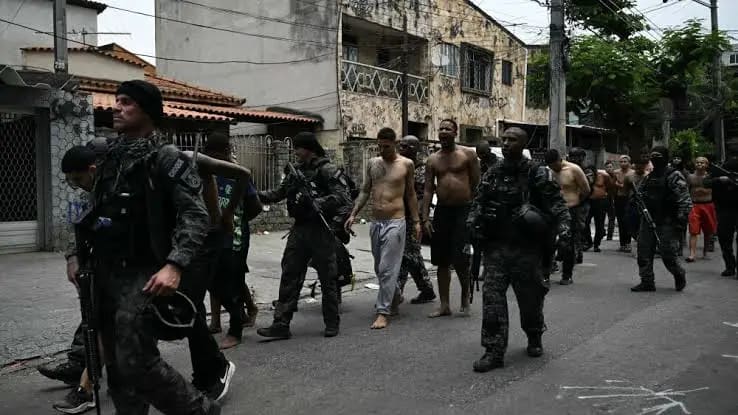
Brazil's government has expressed concern over the United States' decision to designate two of the country's largest criminal groups as terrorist organizations, warning that the move could put Brazilian sovereignty at risk, including the possibility of US military operations on Brazilian territory.
The warning from Brazil's Ministry of Foreign Affairs, known as Itamaraty, came after Washington designated the Primeiro Comando da Capital (PCC) and the Comando Vermelho (CV) as foreign terrorist organizations. Brazilian Foreign Minister Mauro Vieira said the designation could have repercussions beyond law-enforcement cooperation and could open the door to broader measures under US counterterrorism authorities.
Brazil's government maintains that although the PCC and Comando Vermelho pose serious security threats, classifying them as terrorist groups would establish a new legal framework that could affect diplomatic relations, financial systems and Brazil's ability to manage its internal security.
US Designation Sparks Diplomatic Rift
The dispute arose after the Trump administration designated the Brazilian criminal groups as terrorist organizations, a move that gives US authorities greater flexibility to impose sanctions and take action against groups considered a threat to national security.
Washington has said that organizations such as the PCC and Comando Vermelho have built international criminal networks involved in drug trafficking, money laundering and other activities that extend beyond Brazil's borders.
Brazilian authorities, however, have expressed doubts about whether this designation is the right approach, arguing that it could undermine existing cooperation between Brazilian and US security agencies.
Foreign Minister Mauro Vieira said the classification could be used to justify actions outside traditional criminal-justice cooperation, raising concern over possible impacts on Brazil's sovereignty.
Government Warns of Possible Military Consequences
In a response sent to Brazil's Congress, Itamaraty said US authorities could interpret counterterrorism laws broadly enough to justify actions beyond sanctions and investigations.
The ministry warned that the designation could create what it described as risks of foreign intervention, including the possibility of the use of military force on Brazilian territory.
The statement does not claim that the United States has announced plans to carry out military operations in Brazil. Instead, Brazilian officials say the legal powers associated with terrorist designations raise concern about how those authorities could be used in the future.
Brazil has historically opposed foreign military involvement in internal security matters, and the issue has become a major point of diplomatic debate.
Brazil Says Existing Cooperation Is More Effective
Brazilian officials say international cooperation against organized crime is necessary, but they maintain that existing police and intelligence partnerships offer better tools than a terrorist-organization designation.
Brazilian authorities have cited joint investigations, financial-tracking operations and intelligence sharing as methods through which countries can combat criminal networks without compromising national sovereignty.
Brazil's government fears that reclassifying criminal groups could shift cooperation away from traditional law-enforcement channels and into a national-security context driven primarily by foreign governments.
Officials also expressed concern that companies, individuals and organizations with indirect ties to the designated groups could become subject to financial restrictions or legal sanctions under US rules.
PCC and Comando Vermelho Emerge as Global Security Threats
Two of Brazil's most powerful criminal organizations sit at the center of the dispute.
The Primeiro Comando da Capital (PCC) and Comando Vermelho originated inside Brazil's prison system but evolved over time into major criminal organizations involved in drug trafficking and other illegal activities.
Brazilian authorities have struggled for years against their influence, particularly as these organizations built international connections through drug-trafficking routes and financial operations.
The United States said the groups' activities had reached a level at which firmer international action was necessary.
Political Tensions Add Another Dimension to the Conflict
The designation has also become entangled in a broader political dispute within Brazil.
President Luiz Inácio Lula da Silva's government has rejected the move, calling it unjustifiable interference in Brazil's internal affairs.
The issue has also drawn attention because of political figures linked to Brazil's opposition. Critics of the US decision say the designation could influence domestic political debates ahead of Brazil's elections.
Supporters of the move argue that stricter action against criminal groups is needed and that traditional approaches have failed to reduce the power of the leading criminal organizations.
New Challenges for the Security Alliance
The disagreement could strain relations between two countries that have historically collaborated on counternarcotics efforts.
The United States and Brazil have cooperated on intelligence sharing and investigations into international criminal networks. Brazilian officials, however, have warned that the terrorist designation could change the nature of these partnerships.
According to analysts, the challenge will be maintaining cooperation while addressing concerns over sovereignty and the limits of foreign involvement.
Both governments face pressure to act against organized crime without triggering a diplomatic breakdown.
Washington Defends a Tougher Stance
US officials say the designation is necessary to respond to criminal organizations operating internationally.
The Trump administration has taken a more aggressive stance toward organized crime in Latin America, arguing that powerful criminal groups should be treated as national-security threats rather than as ordinary criminal organizations.
The designation allows Washington to target financial networks and impose sanctions on individuals and entities linked to these groups.
Brazil, however, maintains that cooperation is what is needed to fight organized crime, not measures that could be interpreted as authorizing unilateral action.
A New Test for US-Brazil Relations
The dispute over the PCC and Comando Vermelho reflects a broader debate over how countries should confront powerful transnational criminal groups.
For the United States, the designation represents an effort to strengthen its capacity to combat international crime.
For Brazil, the move raises questions about sovereignty, international law and the future of security cooperation.
As both governments attempt to resolve the dispute, the issue could become one of the biggest tests for US-Brazil relations amid Latin America's shifting security landscape.
Reader Conversation
You must be logged in to post a comment.