Michelle Bachelet Withdraws from UN Secretary-General Race as Diplomatic Maneuvers Reshape Global Leadership Contest
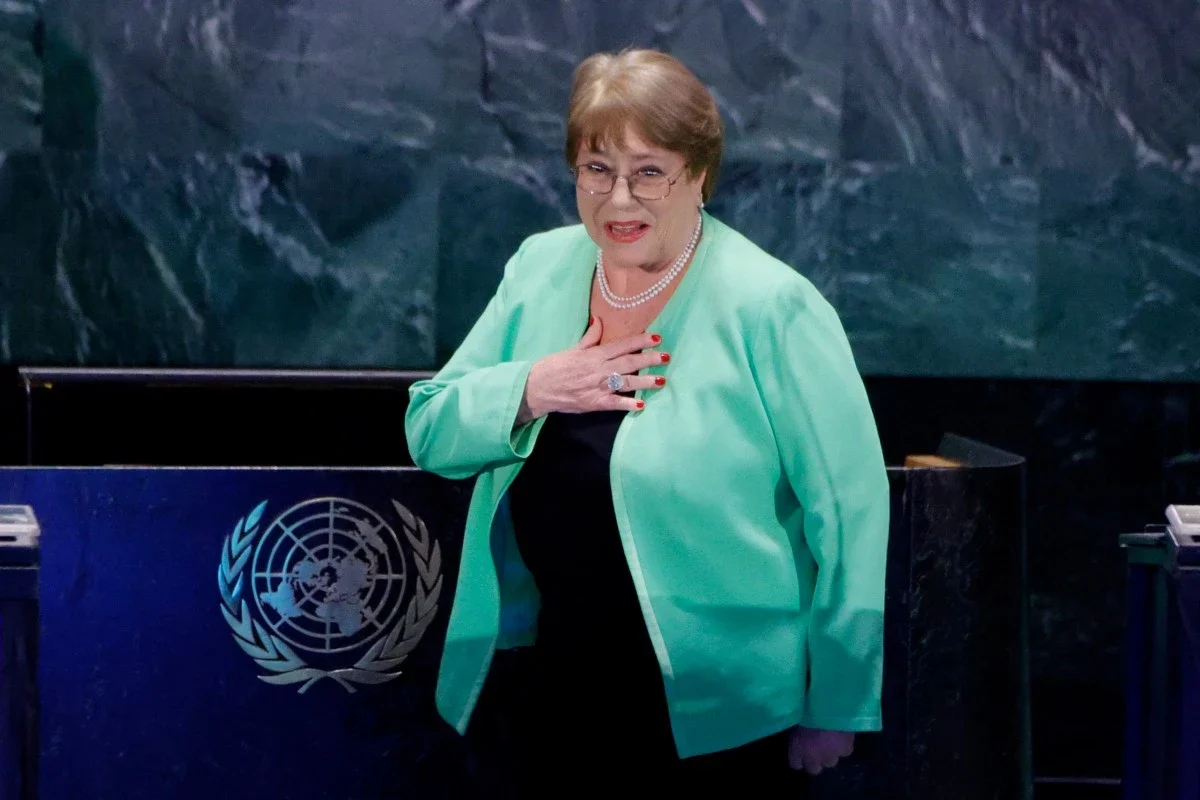
SANTIAGO: Former Chilean President and prominent global diplomat Michelle Bachelet has officially withdrawn her candidacy for the post of United Nations Secretary-General, marking a dramatic shift in the high-stakes diplomatic contest to select the next leader of the world body ahead of the 81st UN General Assembly.
Bachelet, who served two terms as President of Chile and previously led both UN Women and the Office of the UN High Commissioner for Human Rights (OHCHR), announced her decision from Santiago following confidential informal consultations and straw polls among the fifteen members of the UN Security Council in New York.
Her candidacy had garnered strong initial backing across Latin America and the Caribbean, where regional governments had advocated for the appointment of the first female Secretary-General in the organization’s eight-decade history. However, shifting geopolitical alignments among permanent veto-wielding members created insurmountable diplomatic roadblocks.
Behind the Security Council Consultations
Diplomatic sources in New York revealed that while Bachelet enjoyed broad popularity among General Assembly member states, recent informal straw ballots indicated resistance from key permanent members seeking regional rotation concessions and specific guarantees regarding international peacekeeping reforms.
In an official statement released by her diplomatic team, Bachelet emphasized that her decision was made to facilitate consensus and prevent prolonged institutional deadlock at a time of severe global fragmentation, geopolitical conflict, and humanitarian crises.
"The United Nations requires united, decisive, and unhindered leadership to confront the existential challenges of our era," Bachelet stated. "After evaluating the current dynamics within the Security Council, I believe it is in the best interest of the organization to step aside and allow regional and global partners to forge a unified consensus candidate."
The Broader Geopolitical Implications for Latin America
Bachelet’s withdrawal represents a setback for Latin American diplomatic aspirations to secure the UN’s top executive post, which has not been held by a leader from the region since Peru’s Javier Pérez de Cuéllar concluded his second term in 1991.
International relations analysts highlight several key dynamics emerging from the race:
- Regional Rotation Debate: While traditional diplomatic convention suggested Latin America or Eastern Europe was positioned for the 2027–2031 mandate, competing geopolitical blocs have pushed alternative candidates from Africa and Western Europe.
- The Push for Female Leadership: Civil society groups and over sixty member states in the "1 For 8 Billion" campaign reiterated demands that the Security Council recommend a qualified female candidate to shatter the historic glass ceiling at the Secretariat.
- Veto Politics and Great Power Rivalries: Escalating tensions between Washington, Beijing, and Moscow have intensified scrutiny on candidates’ past voting records, human rights reports, and multilateral alignments.
Next Steps in the UN Selection Process
The UN Security Council will continue closed-door straw polling throughout October, with the goal of submitting a formal recommendation to the General Assembly before the conclusion of the 2026 legislative session.
Chilean President Gabriel Boric commended Bachelet for her lifelong dedication to multilateralism, human rights, and global peace, affirming that Chile will continue to play an active, constructive role in championing democratic governance and international law on the global stage.
Reader Conversation
You must be logged in to post a comment.