Maduro Pleads Not Guilty at Federal Court in New York
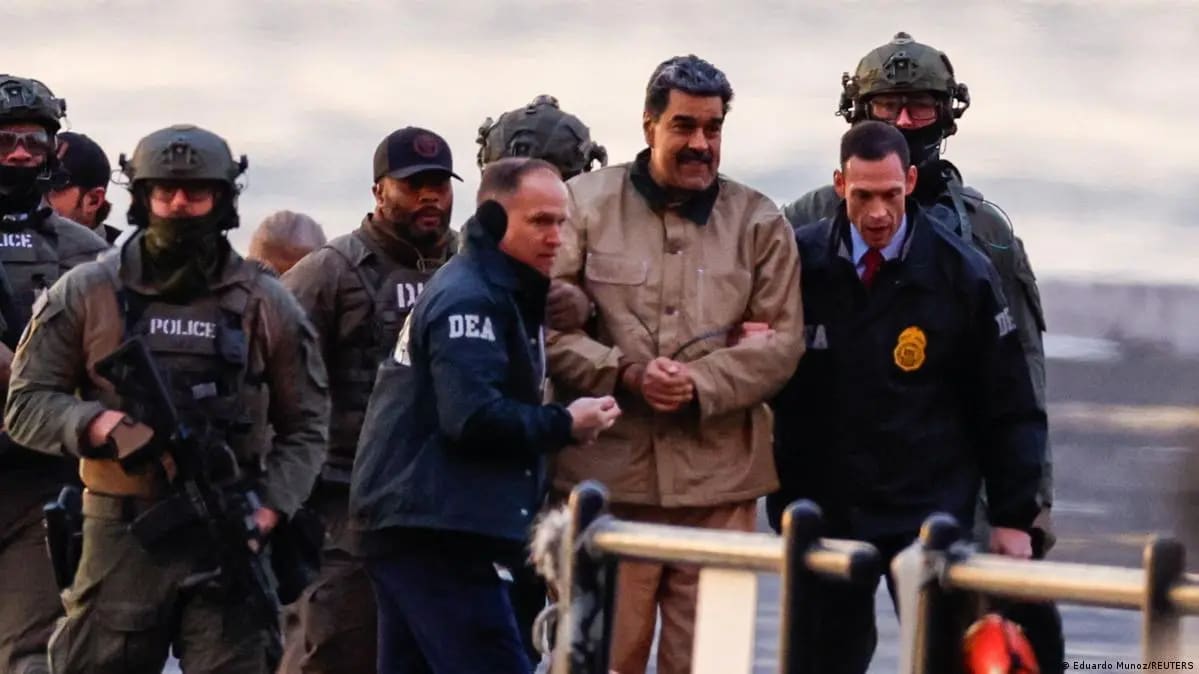
New York: Former Venezuelan President Nicolás Maduro and his wife, politician and lawyer Cilia Flores, appeared on Monday, January 5, 2026, before the US District Court for the Southern District of New York to plead "not guilty" to four charges brought by US prosecutors: narco-terrorism conspiracy, conspiracy to import cocaine into the United States, possession of machine guns and destructive devices, and conspiracy to possess such weapons. The hearing, presided over by federal Judge Alvin K. Hellerstein, lasted less than an hour.
The appearance took place just two days after a US special forces nighttime operation captured Maduro and Flores at their residence in the Caracas metropolitan area on January 3, 2026. As he entered the courtroom, Maduro greeted those present with "Happy New Year." Outside the building, counter-protesters carrying the Venezuelan flag gathered in support of the former president. The formal indictment, released the same day as the operation, describes Maduro as the "de facto but illegitimate ruler" of Venezuela and alleges that since 1999 he coordinated the trafficking of thousands of tons of cocaine to the United States in collaboration with the Cartel of the Suns, the Sinaloa Cartel, the Segunda Marquetalia — a FARC successor — and the ELN.
The Charges and Their Legal Scope
In addition to Maduro and Flores, the indictment involves four high-profile co-defendants: Diosdado Cabello Rondón, considered one of Venezuela's most powerful men and former National Assembly president; Ramón Rodríguez Chacín, former Interior Minister; Nicolás Ernesto Maduro Guerra — "Nicolasito" — the former president's son and National Assembly deputy; and Héctor Guerrero Flores, identified as the leader of Tren de Aragua, a gang designated as a foreign terrorist organization by the State Department in February 2025.
The narco-terrorism charge under 21 U.S.C. § 960a carries a mandatory minimum sentence of 20 years in prison, while the conspiracy to import cocaine carries a 10-year minimum. Maduro's defense lawyers anticipated challenging both the court's jurisdiction and the legality of the capture operation, arguments similar to those raised by Panama's General Manuel Noriega in his trial before US courts in the 1990s.
International Reactions
The operation and criminal proceedings generated condemnations from Brazil, Chile, Colombia, Mexico, Uruguay, and Spain, which in a joint statement called US military actions in Venezuelan territory "an extremely dangerous precedent for regional peace and security" and declared them contrary to international law. China and Russia also rejected the operation. In Venezuela, acting president Delcy Rodríguez assumed government command and began a gradual diplomatic opening with Washington under the three-phase framework described by Secretary of State Marco Rubio: stabilization, economic recovery, and political transition.
Reader Conversation
You must be logged in to post a comment.